Below are the notes from my first presentation, as it was showing multiple media I chose to not use slides but have these nots to guide me through the experiments.
Start by showing the website for Aesthetic Programming
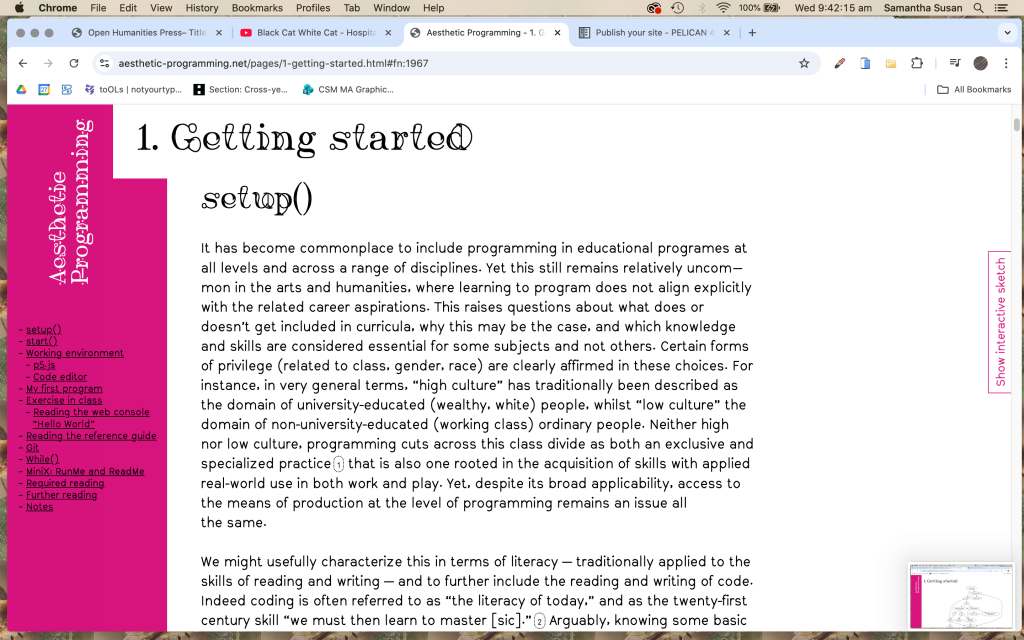
I chose to pull some text from the Aesthetic Programming: A handbook of software studies by Winnie Soon and Geoff Cox. Published as a physical book, ebook and static website in 2020.
I selected a section of the first chapter, under the subheading setup(). Which, as the text makes reference to, is a javascript function for ‘setting up’.
This text sets up the reasons and context for learning to program.
Show Pdf, included below alongside the relevant text

I started by pulling the text and reworking it typographically. In this first example I still use typefaces that echo the subject matter, type that has been altered thru code and its pre altered version.
I’ve also made invisible the text I have not highlighted and have cut into the body text with the end notes. This experiment ended up creating a new edit of the text (tho to the computer all the text is still there, in the code that renders this file, and so still readable, even to a screen reader or to the ocr text recognition in many pdf readers, its just styled to be invisible for those looking at it).
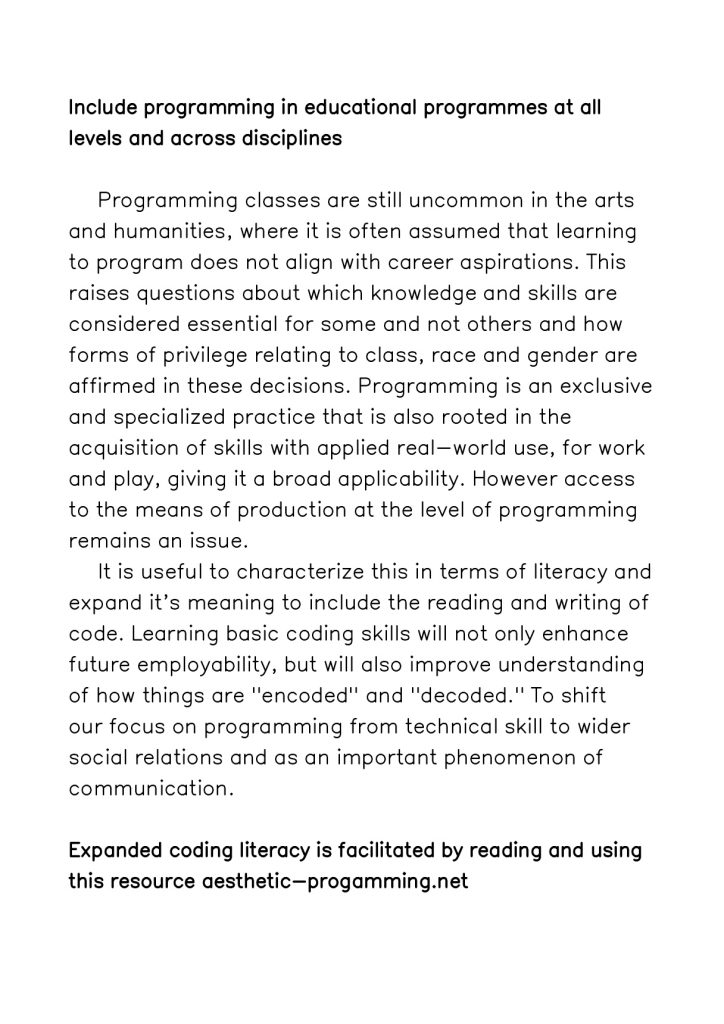
Following this edit I tried rewriting the text, as a brief summary but also in a more definite position (not because I necessarily agree with that as a tone of writing), removing the words which the authors use to make their text more about exploration a bit more ambiguous. Pushing their message in a harder faster way, in contrast to their longer, slower and evidence rich way.
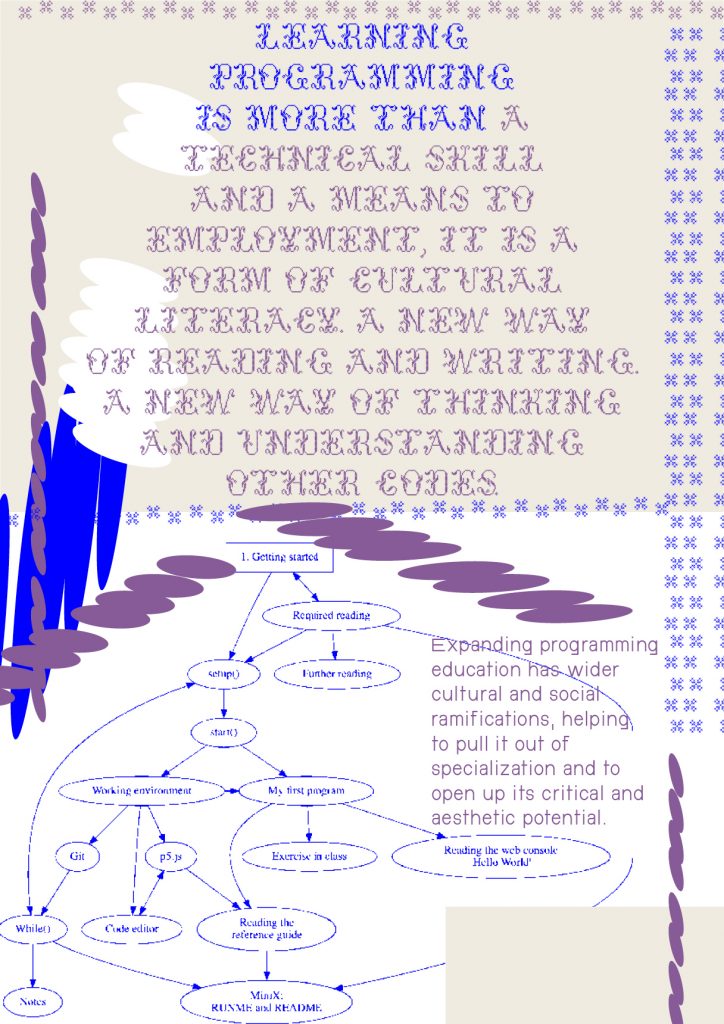
I then made another even more severe edit and attempted to make poster(?) In an ornamental style using type that references embroidery as cue to pixelation and also to try and visually connect to the work of women in early computing. I’m definitely channellig some of the Reitlanden Women’s Office1 MsHeresies2 work here, realising I’d ned to do a lot more visual research to get this working.

I then tried pulling the html code for this section of the website and its corresponding css and working them together. There are a few versions of this, which although I think are aesthetically pleasing I’m not sure are doing much more than making the code of the site visible in quite a superficial sense.


Aesthetic Programming focuses almost entirely on javascript and so although the html and css form the presentation of the work they are not really part of the projects remit. Connected but perhaps not very usefully…
Then to try something completely different and also as I felt if some of these were attempts to further (beyond arts and humanities in academia) or more quickly disseminate the ideas in the text that they were still in danger of communicating in way that might only appeal/be readable by those audiences, ie. A bit unclear, still a bit slow.
So I decided to splice the text (as audio using text to speech software) with the visuals of a video speaking in the visual language of internet reporting or explainers… in this instance a programming report channel talking about vibes coding… ai engine built software…
The video does not cover the whole text, and as the t2s tool3 is pretty clunky I’ve also captioned it with AI tools in Adobe :-/. The original video is The “vibe coding” mind virus explained…4 from Fireship (who have 4.4m followers) how provide coding content, including tutorials from their YT channel.
Leave a Reply