This week I’ve printed a number of copies of Aimee Parrott’s Picked his bones in whispers (2019) and written my draft of the first iteration of the written response.
Documentation of making the copies
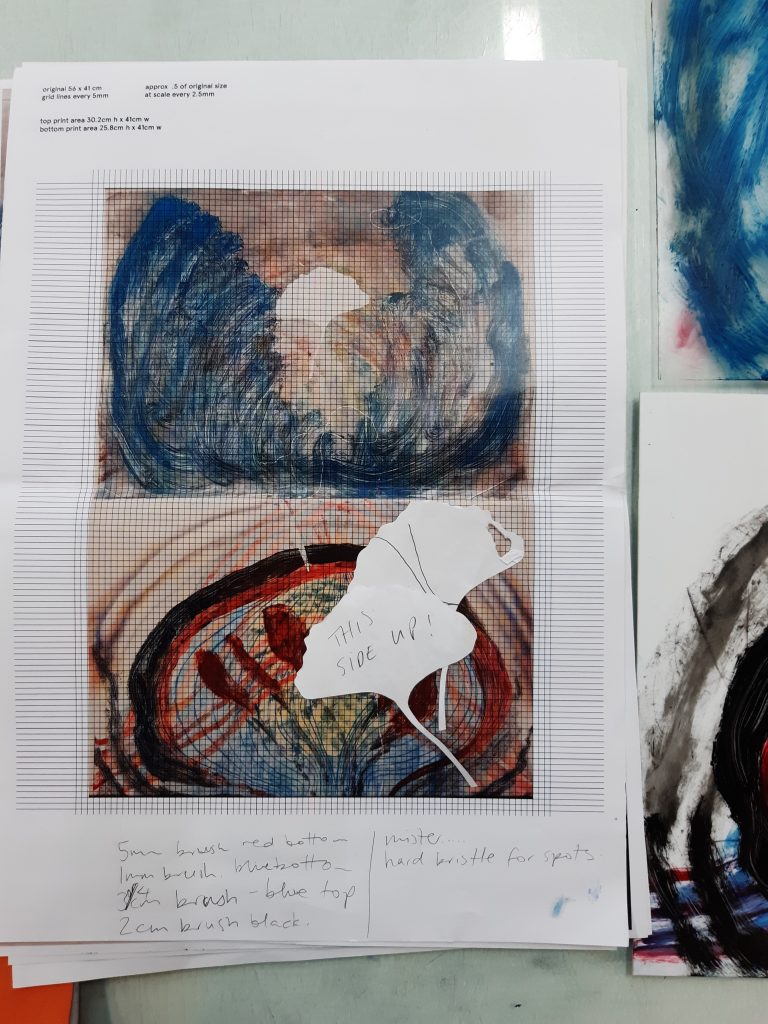
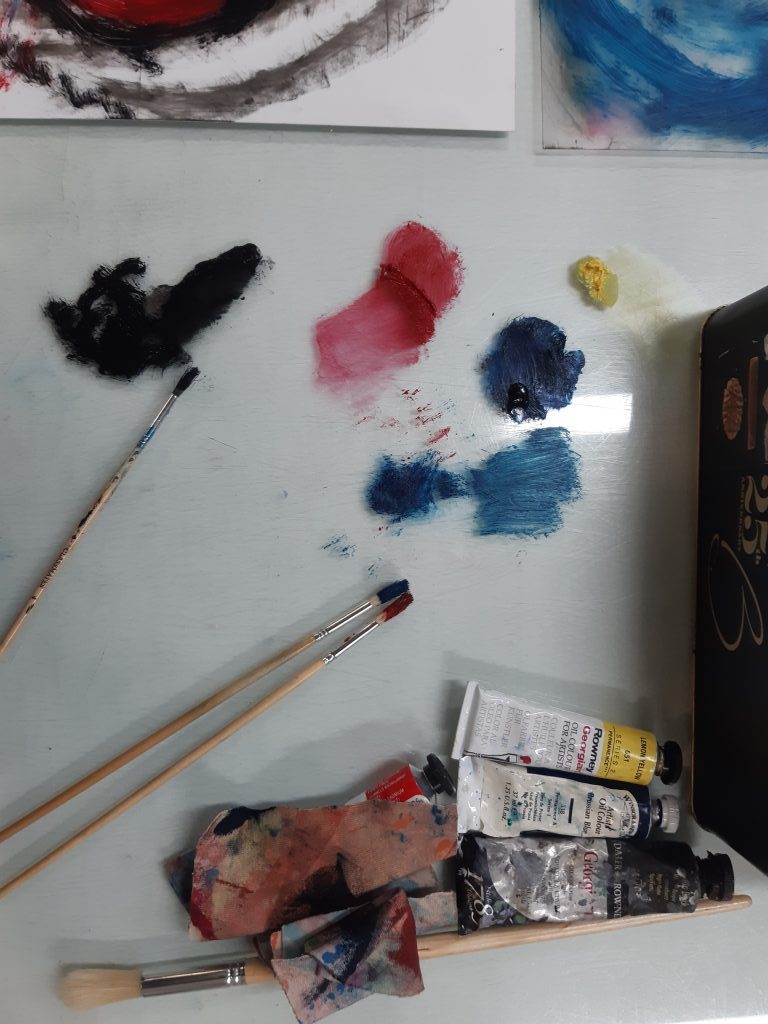

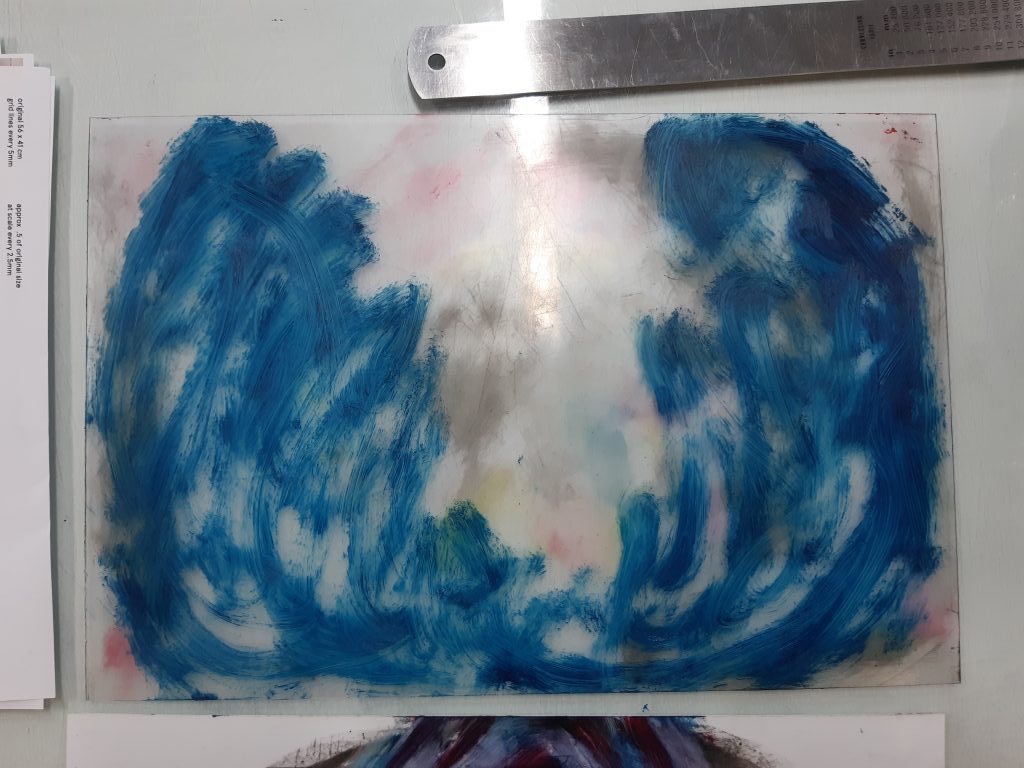
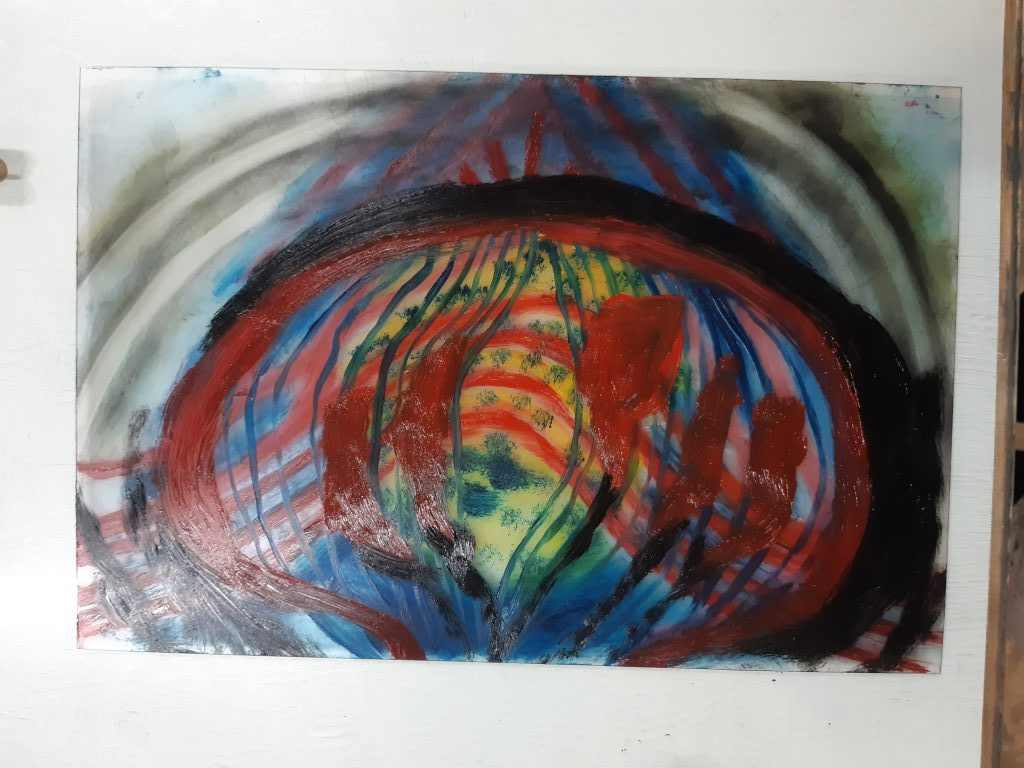
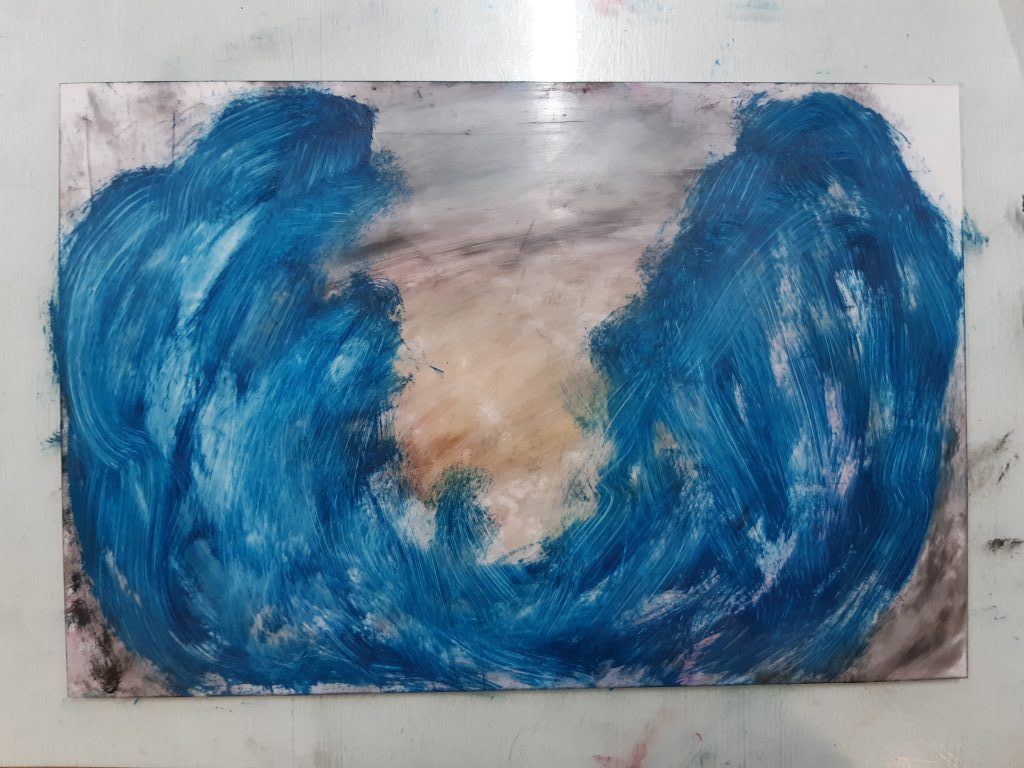
Images L to R, reference printouts with an overlaid grid to help gauge the thickness of brushes used. 2nd row: painted plates in progress before being printed as initial tests onto damp paper. 3rd row: painted plats ready to have the resist object placed on top and then printed onto fabric. You can see the paint is a little too heavy on this second set, I became heavy handed as I worked with the paint more confidently, this made the prints lses successful at capturing the original work.
The method I used involved printing out the artwork approximately to 1:1 scale, using a screen resolution image (so not very good quailty!). I split the image into the 2 separate prints which the artist has then sewn together.
The first day of printing I copied the work by eye, based on the final print, often forgetting to reverse the artwork in my mind. On the second day I printed out mirrored images so that I could more or less trace them by placing them underneath the acrylic sheet I was using as a printing plate. The images that were more dirctly traced were not as successful, despite them being more accurate in composition.
There are certain aspects of the image I am copying that I have focused on trying to replicate and others which I have let slide to varying degrees and then reassessed my priorities between prints. For example I’ve focussed on resist of gingko, large folds and thread; direction of brushstrokes; placement of colours; size and shapes.
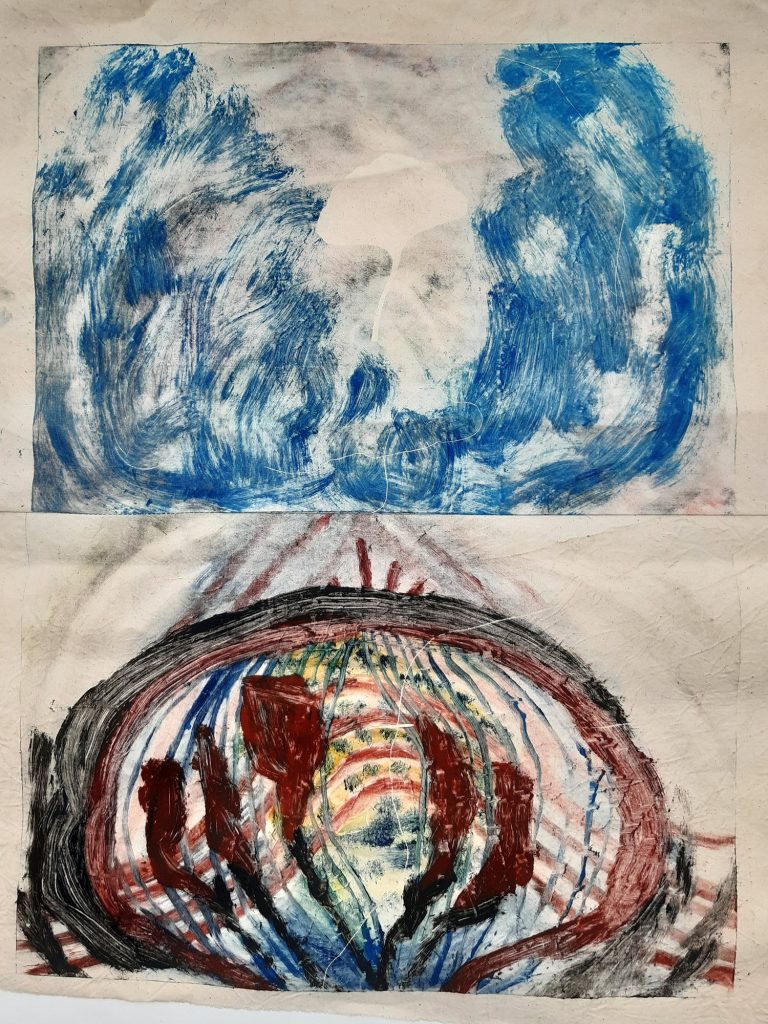
Above is the most accurate copy I made, it was the second attempt made.
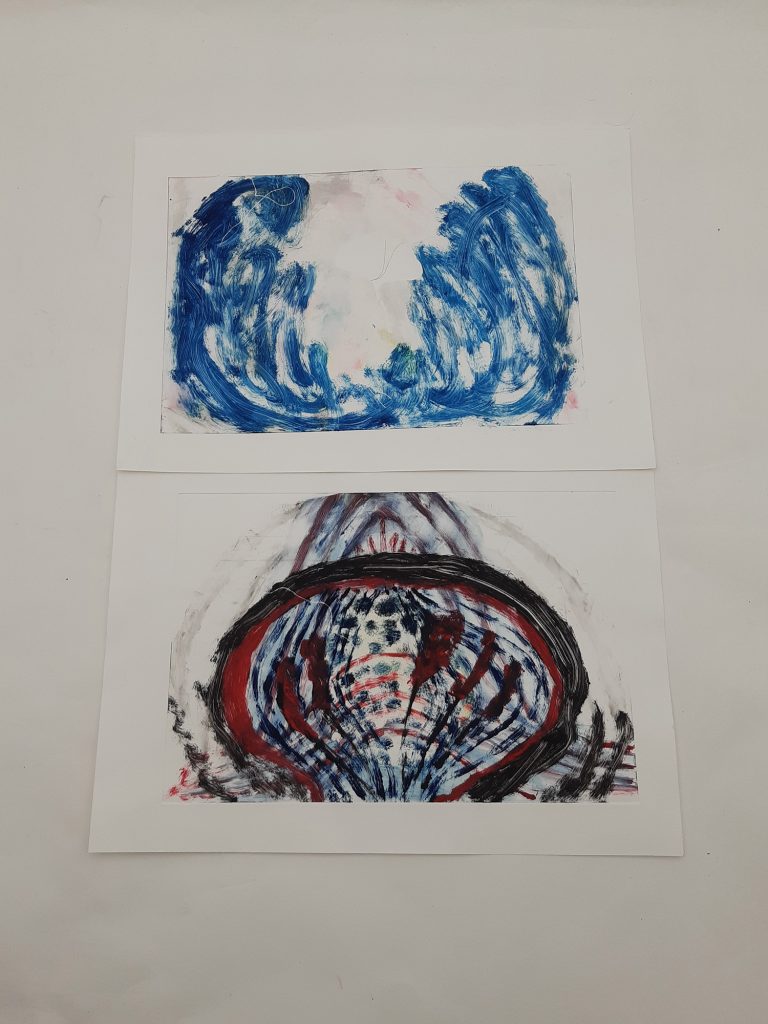
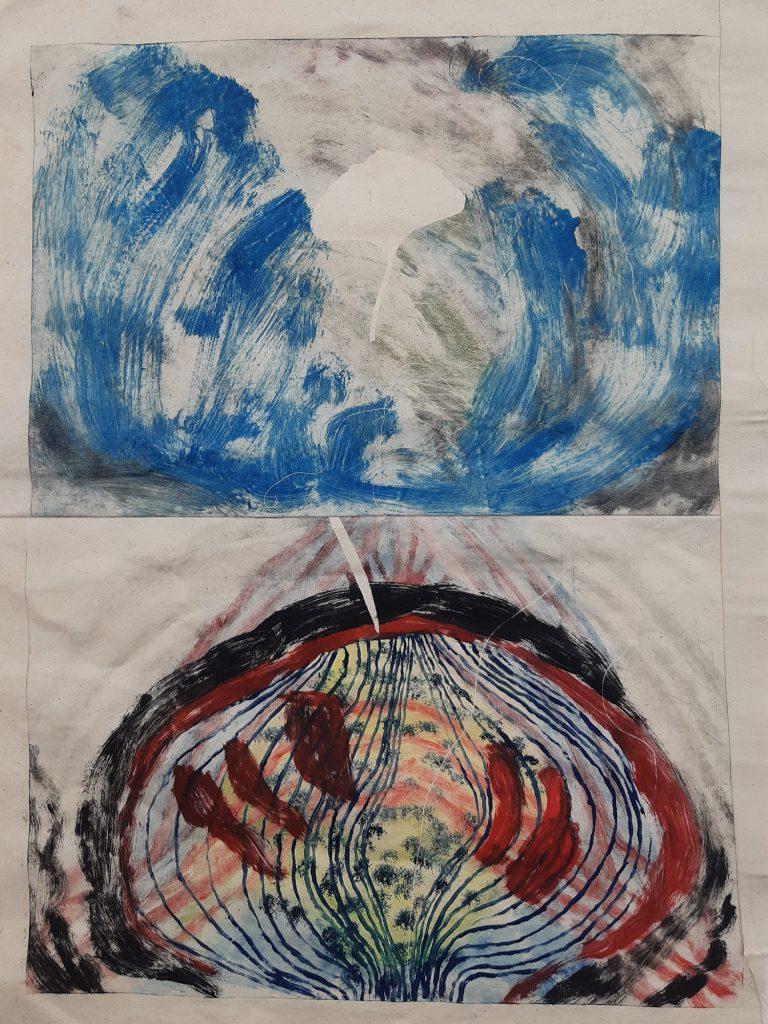
Above L to R: First attempt at copying the work, very much testing and so printed on paper.
Third attempt at copying, where I traced it through the clear acrylic plate, areas of the print look heavy handed and despite its composition being much more correct it falls flat, perhaps more evident when seeing the objects side by side.
First draft of written response
Whilst making these monoprints I found it hard to maintain a tight method, especially copying such a layered, gestural work. I use tight to mean: accurate, repeatable, accumulative or able to refine directly. I’m thinking of this in relation to my regular use of digital working files that can be versioned, reversed, pulled apart, made of discreet parts. Monoprinting in this painterly manner seems to work in opposition to this, rather than allowing me to refine a work as a retraceable set of actions it means each refinement of method produces a single, unalterable work. There is also a lack of mechanisation throughout the process, except for the pressure used on the press, which means there are a large number of manual controls which impact the print.
As I printed I found it unexpectedly difficult to forsee how a painted plate would print, something I have not experienced with other printing methods such as: Riso, digital, offset, letterpress or lino. This is obviously due to my lack of experience, but I suspect the element of surprise does not entirely disappear through practice. As I tried to mimic this artwork through compositional correctness (i.e. tracing it), the less it replicated the gestural tone of the work, which I found an interesting situation. From what I can tell this was due to the slowness of my brushstrokes when focused on accurate size and shapes, which meant the marks did not look as accurate in terms of fluidity of gesture or colour when printed.
I will begin to iterate by taking multiple pulls from a painted plate, this will help me to further question monoprinting in terms of its inability to produce accurate multiples, which in turn makes it non-viable commercially and somewhat explains its use/status within art (rather than design). I’ll also be looking to see what unexpected aspects of the method surface through iterations that degrade the image.
Leave a Reply