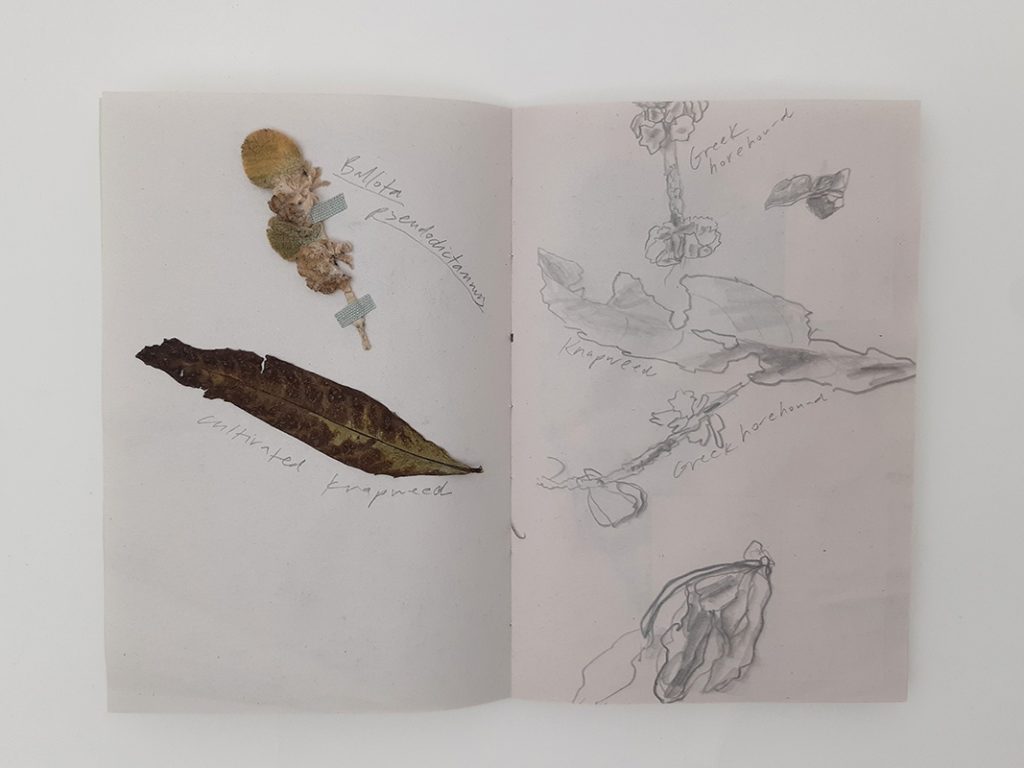
I developed my collected materials further, into a publication, something like a scrapbook.
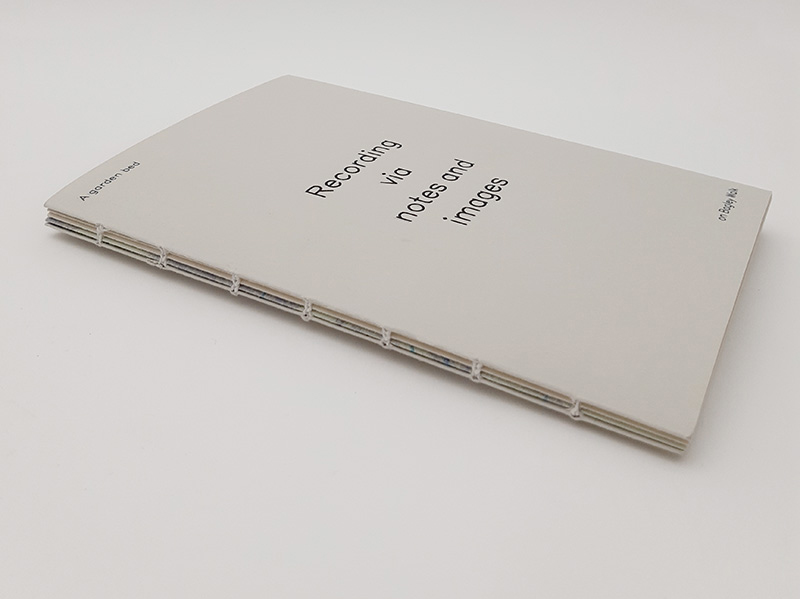
I had been reading and spending time with Carla Leisching’s Good Hope and wanted to experiment with a similarly layered and fragmented use of images used to illustrate and agitate alongside her multiple styles of writing that examine White supremacist settler-colonialism using the Cape of Good Hope as her starting point and crux.

I have organised my publication into two sections:
First is a section of printed text pages and tipped in photos and maps to give a zoomed out view of the site. This sections contains the records of life from my first attempts to record it, through note taking, editing my notes to focus on the use of the site by people and my tallies of insects and birds. A small text about the methods used and one explaining some of my biases are included, alongside labelled photos to help readers identify the plants on site.
Secondly a section made from my original sketches and pages layered with microscope imagery and the collected plant material to provide a zoomed in, tactile perspective of the plants, evidence of life and use of the site.

This book has been made in way that cannot be easily reproduced, I chose to make it singular as the making of it formed part of the editing process and the final pagination dictated by the physicality of the original materials, for instance the way the original drawings fall across spreads.
The papers used are mostly scraps from my studio and newsprint from my notebook, connecting materially to my personal insights and influence in this investigation.
I’ve organised it into the two sections to follow the trajectory of my investigation and to show the contrast from zoomed out to zoomed in. It also provides a more concrete, yet personal record. One that shows on these shifts in perspective, in scale, in prioritised vision.
Leave a Reply