Planning for workshop
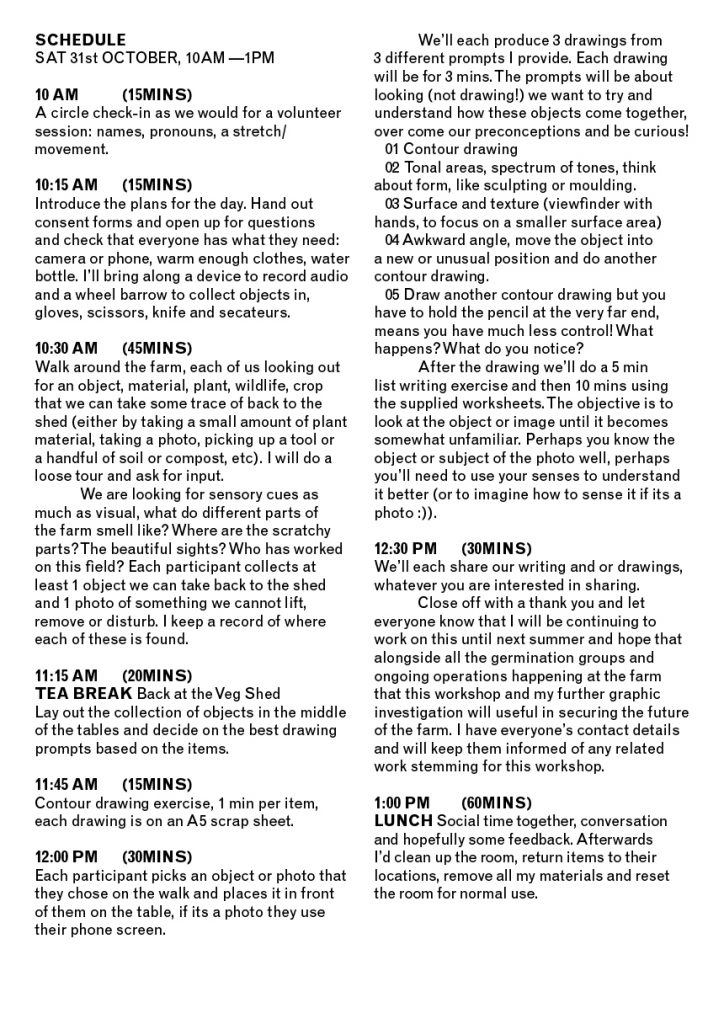
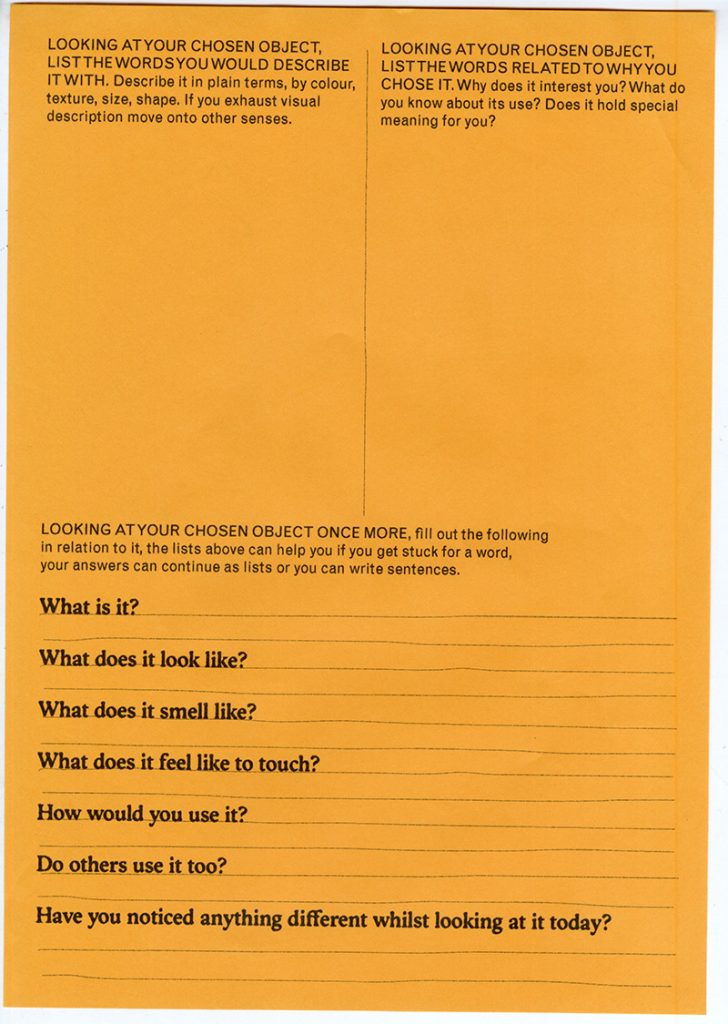
I’ve created three main documents as part of the planning of this workshop: the schedule, with notes for task I ned to complete throughout the 3hr session; a consent form for participants to complete, covering photos, audio recording and use of participants writing and drawing for my studies; a worksheet for the written component of the workshop. All three documents are included in full below.

Map — scrapped component of workshop
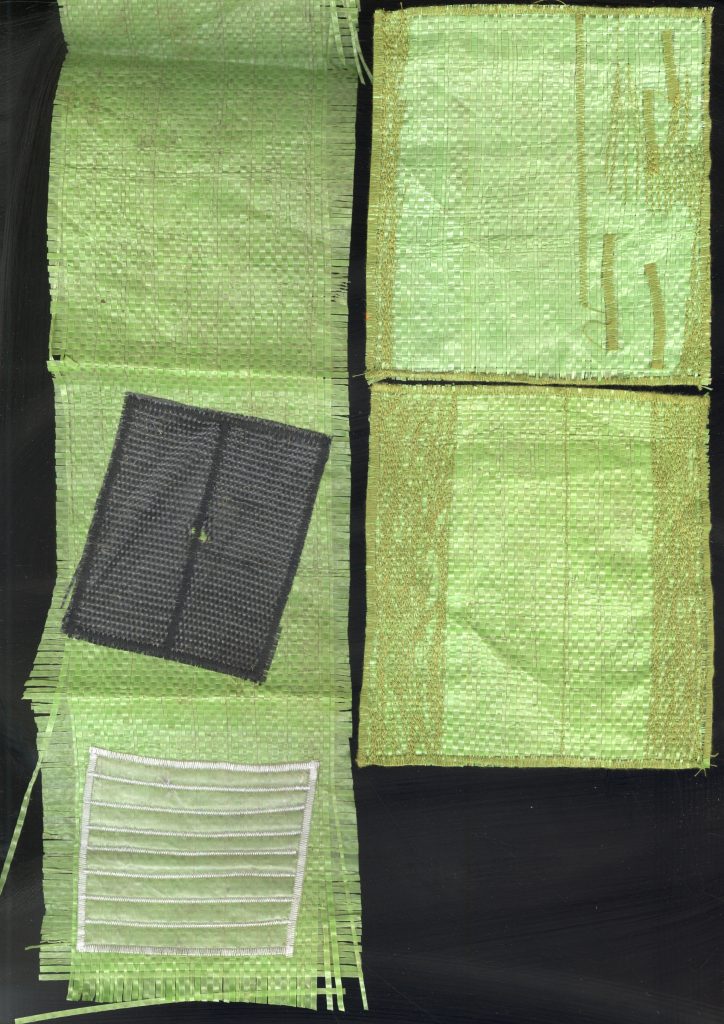
Initially, as I’d been drawing maps of the farm, I had thought to integrate a map as part of workshop. The idea was to get participants name or draw a symbol for their chosen object and to add it to a large map, that would eventually be displayed at the farm. I considered leaving the map up with instructions for adding to it when people wanted, though realised this seemed opposed to my interest in crating provision and incentive to take part and I decided it was very unlikely anyone would add to it on their own, except perhaps those who had taken part in the workshop and felt familiar with what was being asked. I began making a large map out of plastic waste: tonnes bags, poly tunnel skin and mypex. But as I experimented with the materials I found the map was not that easy to read and also felt like an inappropriate us of the materials. Perhaps it was partially due to how they looked sewn together, but I eventually gave up on it, deciding that mapping as an exercise wasn’t bringing anything to participants and that I was struggling to make the map visually engaging.

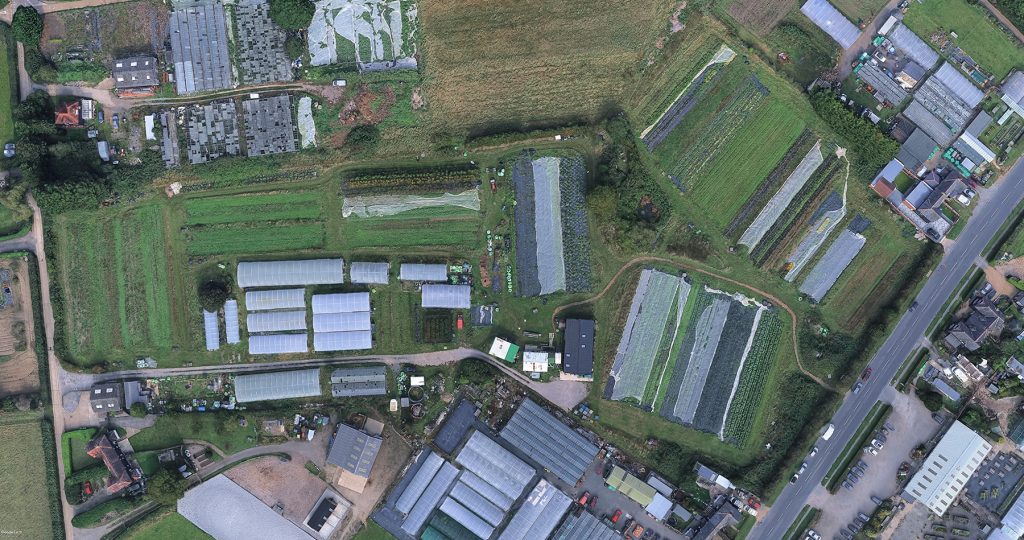
I printed out some A3 aerial images of the site taken from Google Earth Pro, including some variation in dates of the image data. Particularly keen to show the participants the stark difference between footage from July 2023 compared to July 2026, just as a reminder of the season passed before we began the workshop. I decided to use one of these aerial images as a place for me to record info from the workshop for my own records only.

Background context — on provision and incentive
Useful background information for understanding why I think people will turn up to a workshop like this is that the farm has been in a period of extreme financial instability for the last 10 months, including staff redundancies and ongoing reflection on how to become more resilient in a marketplace that hugely undervalues food and particularly the environmental, small-scale production of it. This is particularly true given that the farm is not in the business of making organic food a high price commodity, a part of the mission is to make good food accessible across the community. This period of reflection has involved a lot of community meetings and workshops to try and solve these problems together. So the community is already primed for coming together to understand what the farm currently is and to imagine what we’d want the farm to become is a valuable exercise. I hope that the workshop will also be a pleasurable experience, giving time to engage with the farm at a slower pace and without time pressure or workload.
Leave a Reply