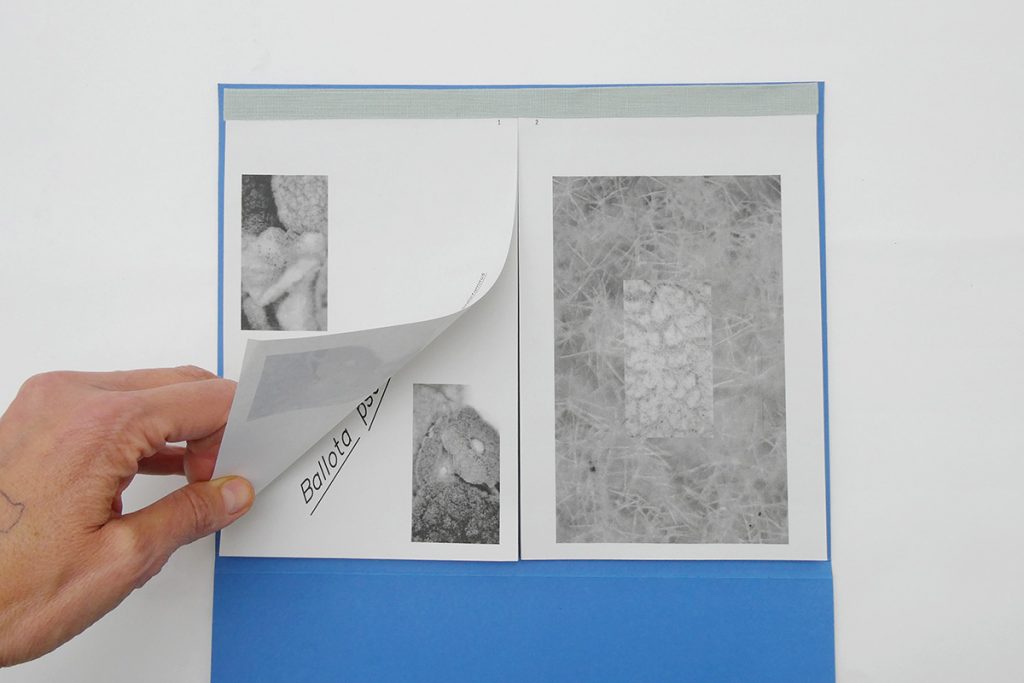
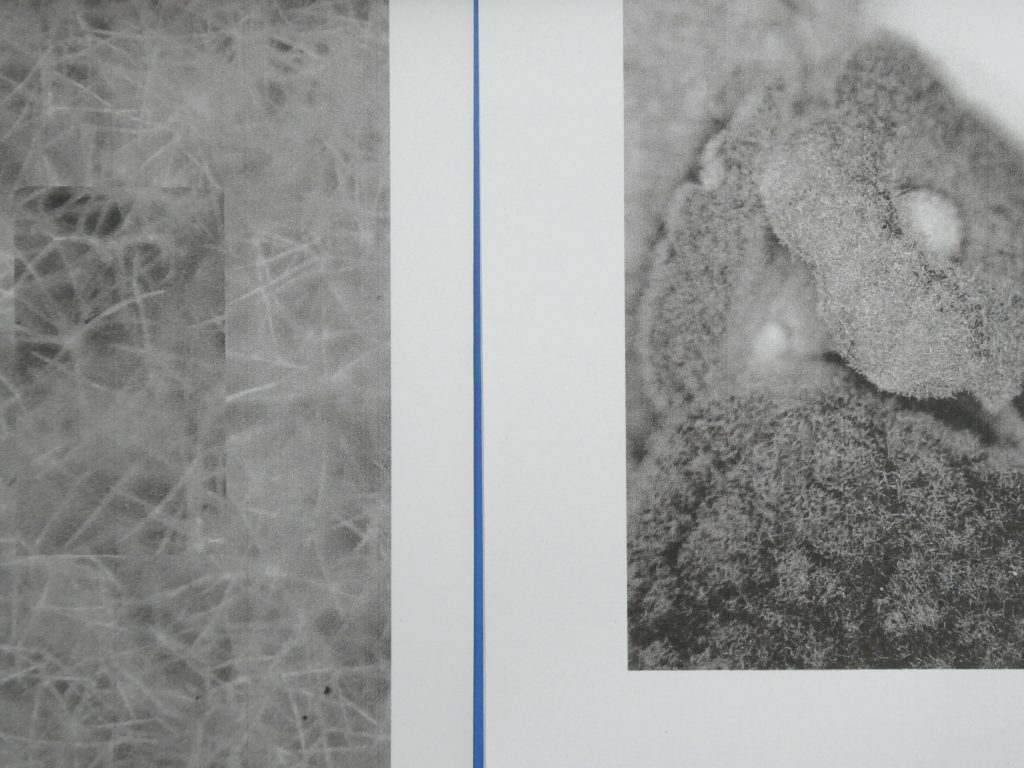
I’ve chosen to look back at my Methods of Investigating project and take a snippet of imagery collected during my investigation, roughly pulled from a combination of two spreads from my final publication.
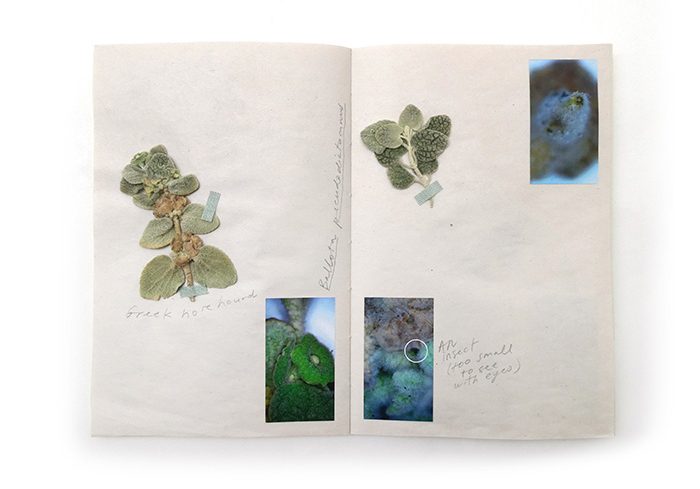
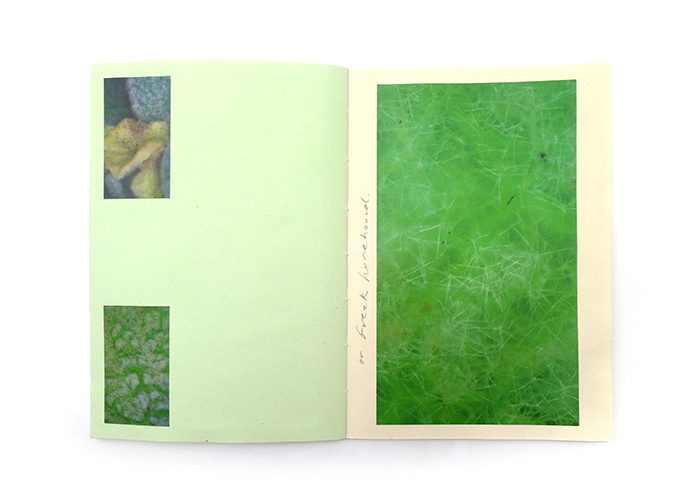
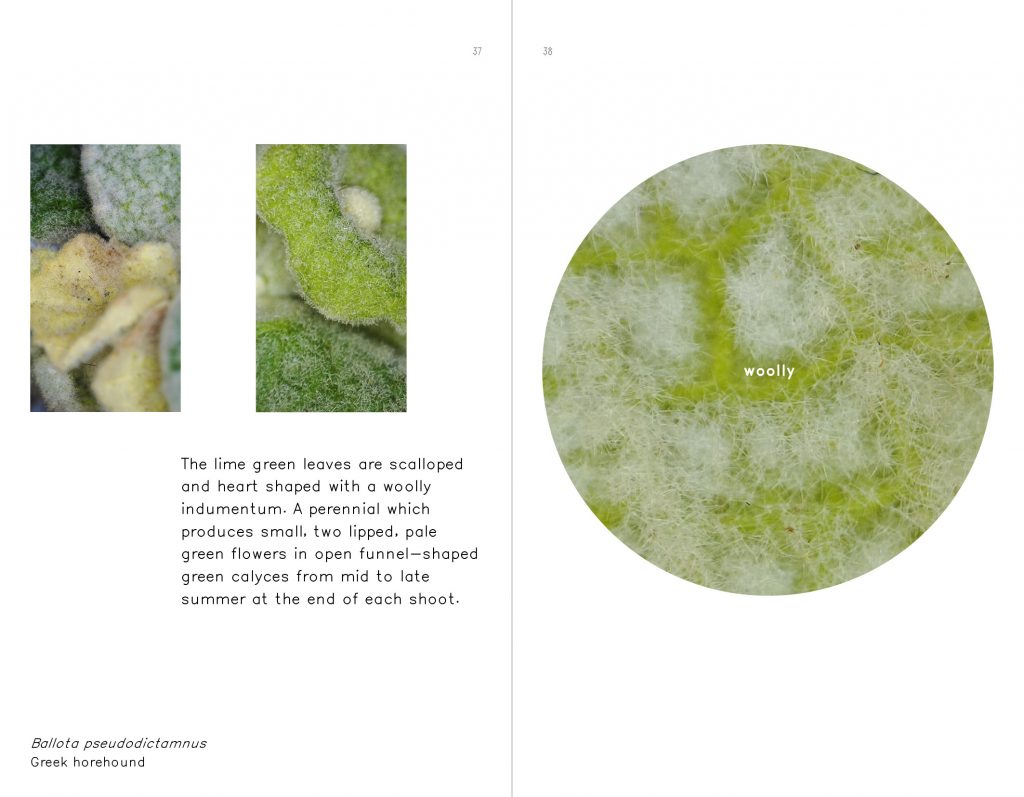
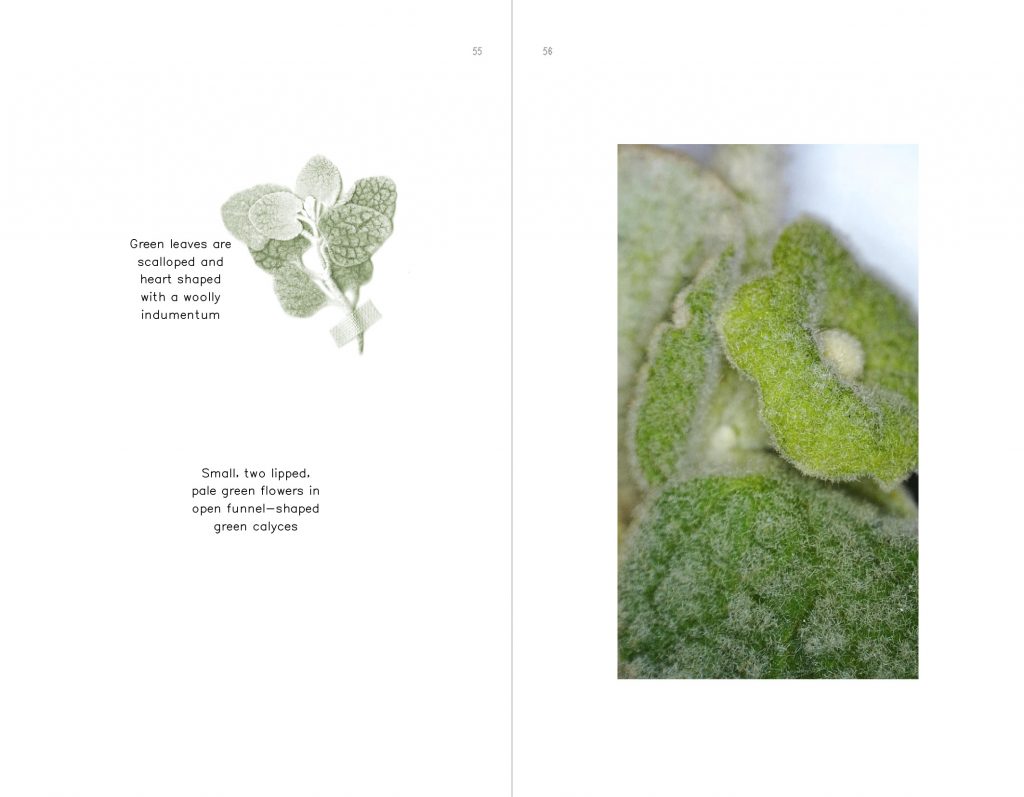
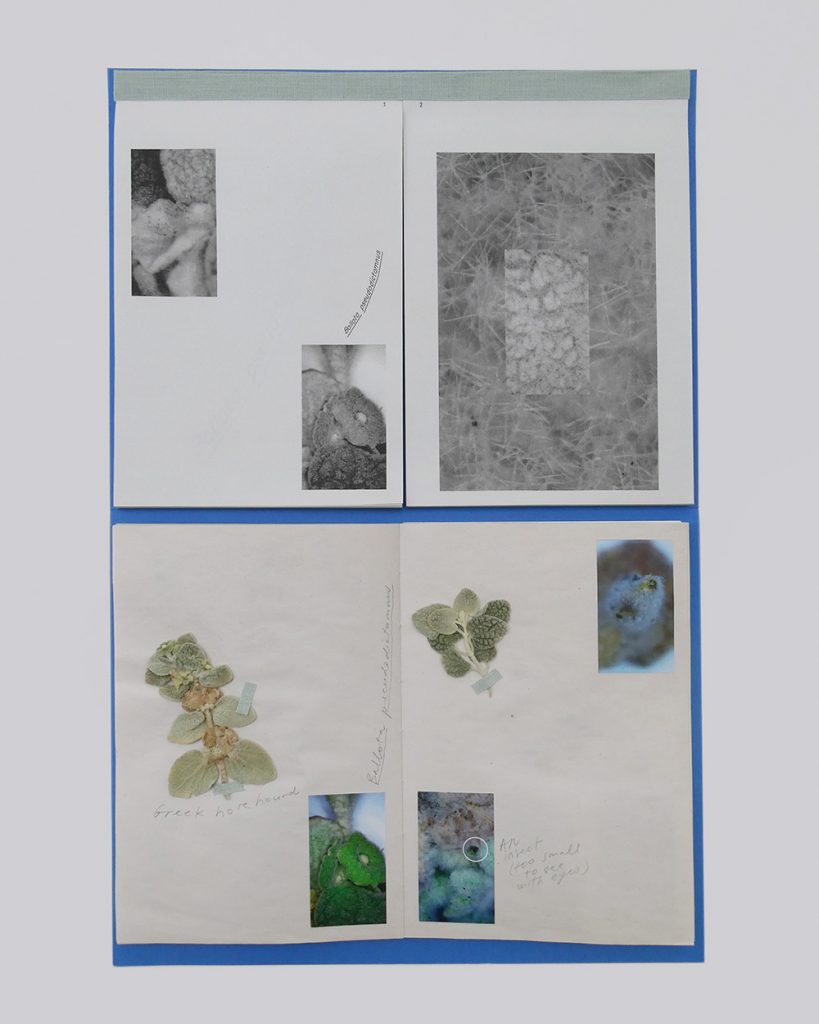
The two spreads which combine to form my snippet
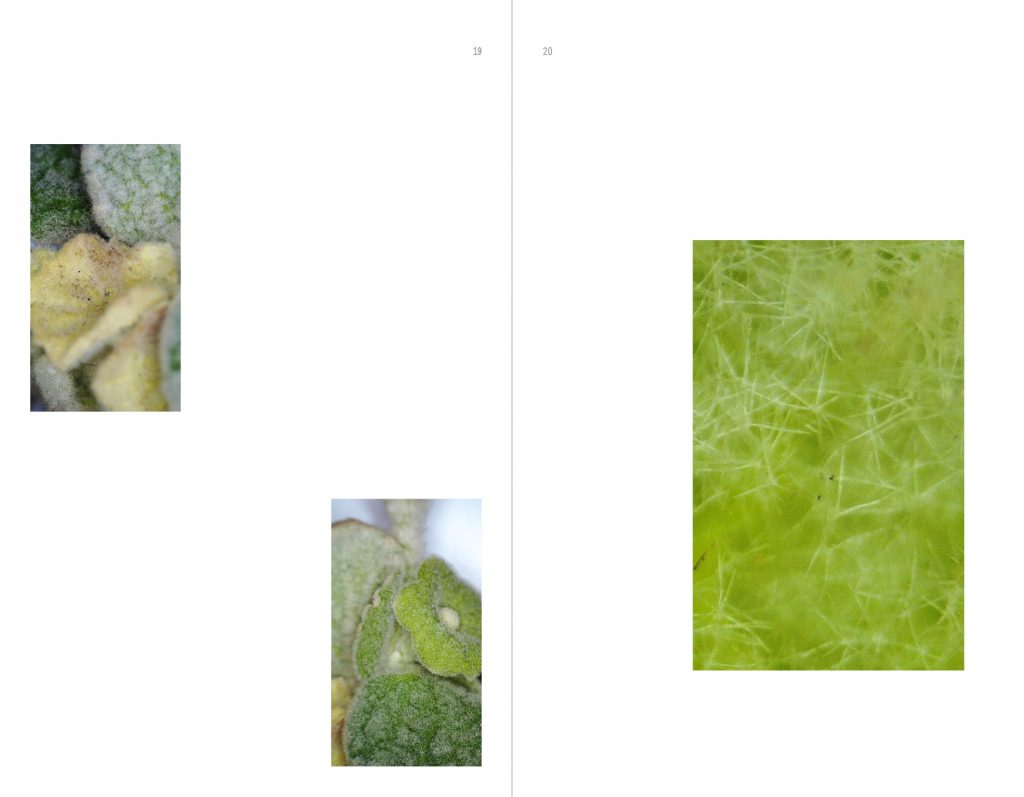
My iterations move between these two spreads, each of which I turn into a single page. One page (1) provides a human vision scale of the plant: with scans of plant material, labels and low magnification photography. And a second page (2) which is zoomed in, using high magnification photos of plant material, beyond human vision.
A small amount of text comes in and out of the iterative process as well, operating as caption, title, as image description of sorts, as well as complete content. I pulled the content from these two sources:
www.burncoose.co.uk
pfaf.org
All the imagery and text is relating to or representating the plant Ballota pseudodictamnus (Greek horehound). The iterations aren’t about the plant so much as they are about scale and view, I move the images around the page, based on a simple 6 panel grid (3 coloumns, 2 rows) to see the effects of different scales in relation on the page, zoomed in, zoomed out. This plant is visually interesting for this experiment as it has a dense wool-like covering which changes significantly when seen in close detail, to a forest of fine, branching fibres, no longer soft or woolly looking.
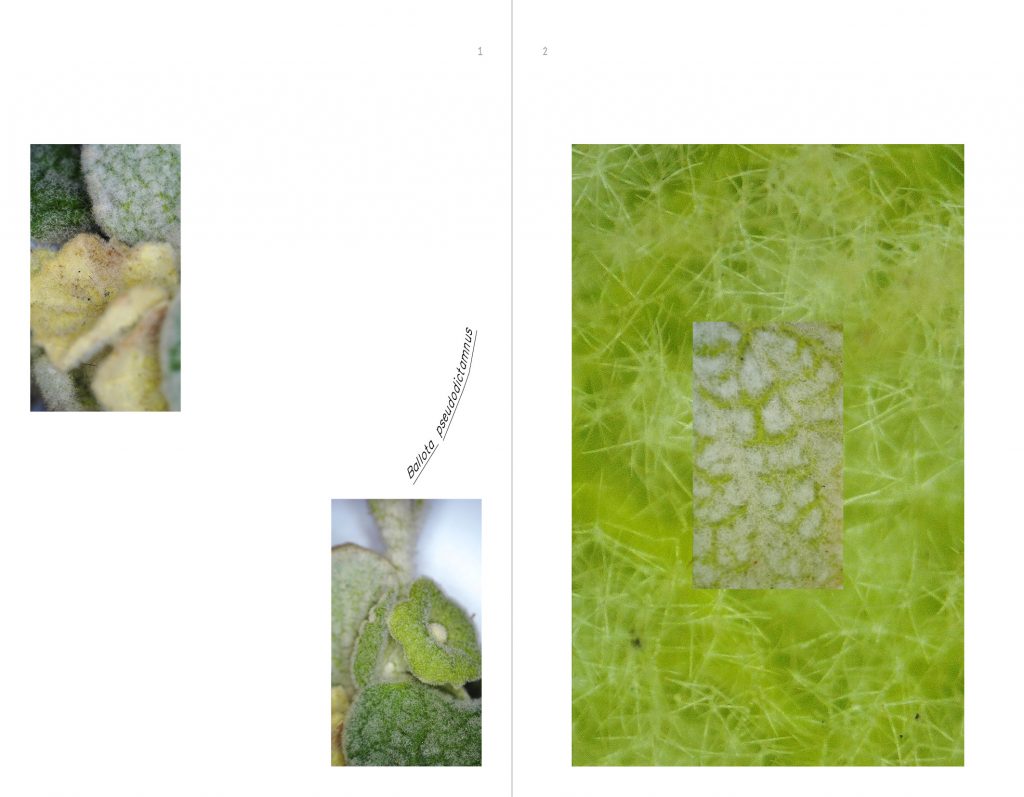
Spreads creating by spliting the 100 pages into 2 pads of 50, bound side by side.
I’ve also produced the iterations in a loop, of sorts, moving from spread 1 to spread 2 across 100 new page layouts. I’ve bound the pages in two sets of 50, with the grid exposed on the last pages. A reader/viewer can move through the pads at different speeds creating new combinations of spreads as they go. Ideally this would be coil bound for greater ease of movement, but staples is all I had to hand.
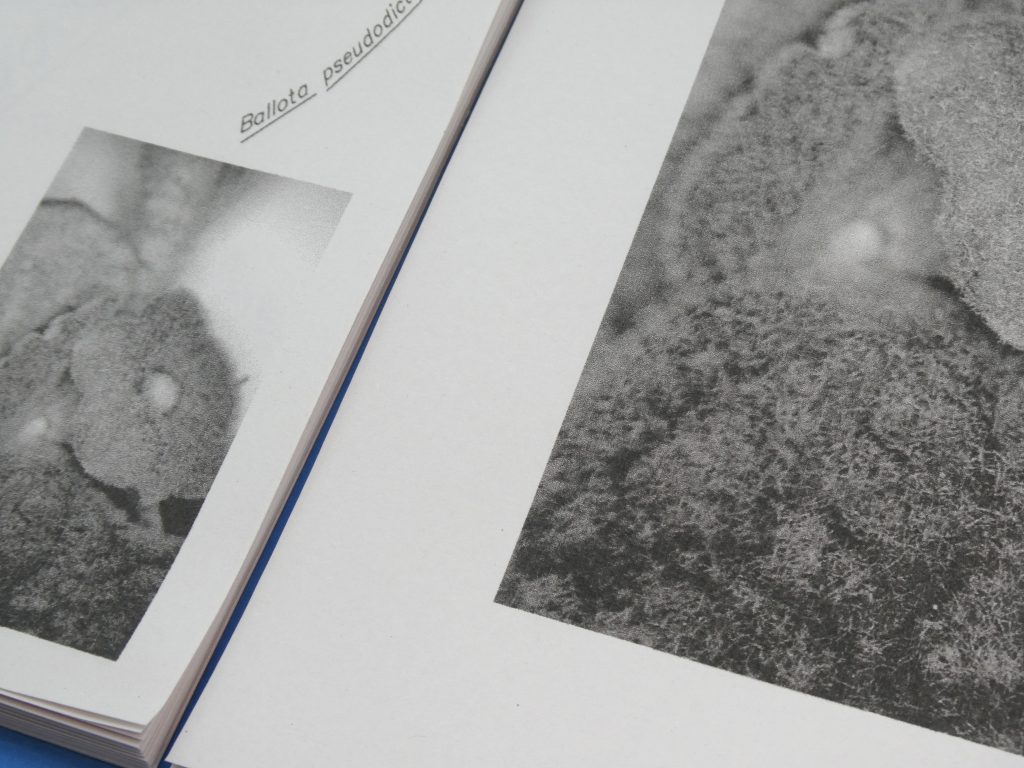
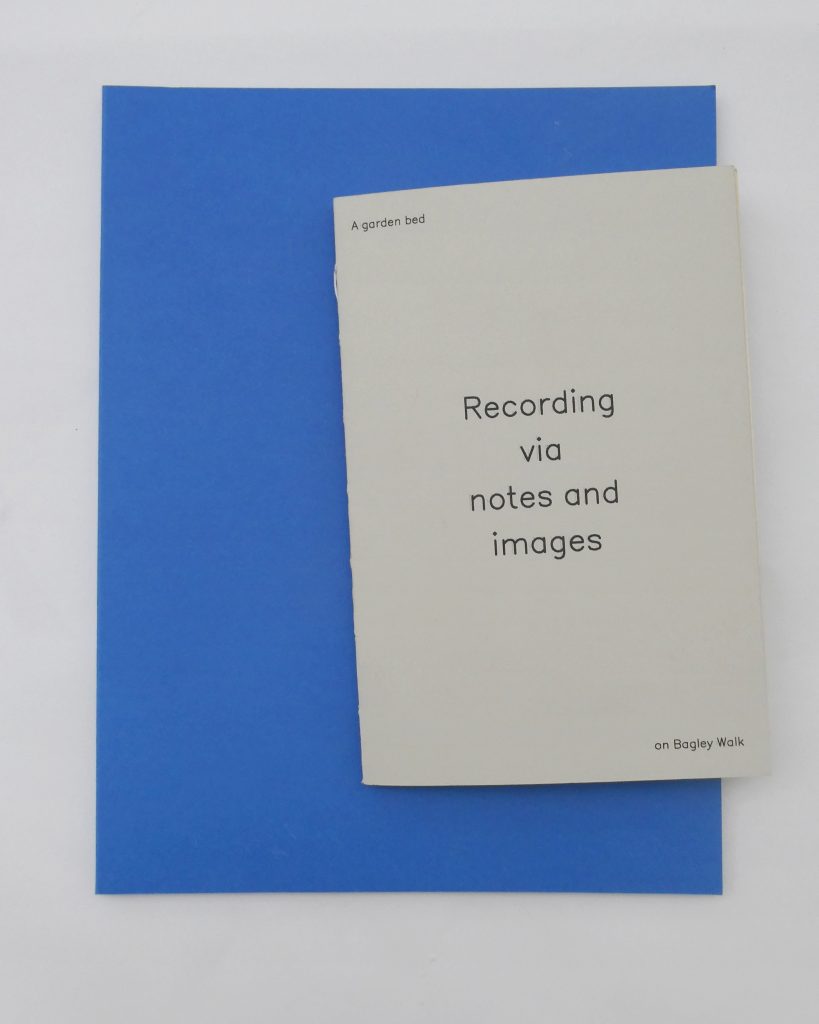
I printed the publication on a black inkjet on recycled office paper and have bound it into a card cover with a spine, this means the original publication can easily be slotted in and the two publications are to be read in relation to eachother.
Leave a Reply