The Farm
This week I’ve focused in on new specifics for my enquiry and am looking at the site of the community farm I work at. With some encouragement from my tutor I feel like I’ve been given permission to follow through with this as a subject rather than a part of how I’m positioning myself.
As the site has not yet made an appearance in my work I wanted to begin by recording the site visually and seeing where that lands me.
Describing the site with maps and photos
I began by drawing maps of the site, from memory and as a starting point as navigation devices. My first few iterations of a birds eye view map failed terribly as I could not contain the site on any piece of paper, each I tried to scale it I ended up sprawling off the page. As I was not accurately drawing map data, I could have easily traced an Open Street or Google map if I wanted accuracy, my focus was on how the different areas of the farm site connect via pathways and the non-productive areas like hedgerows, wildflower strips, scrap metal deposits and bramble patches.
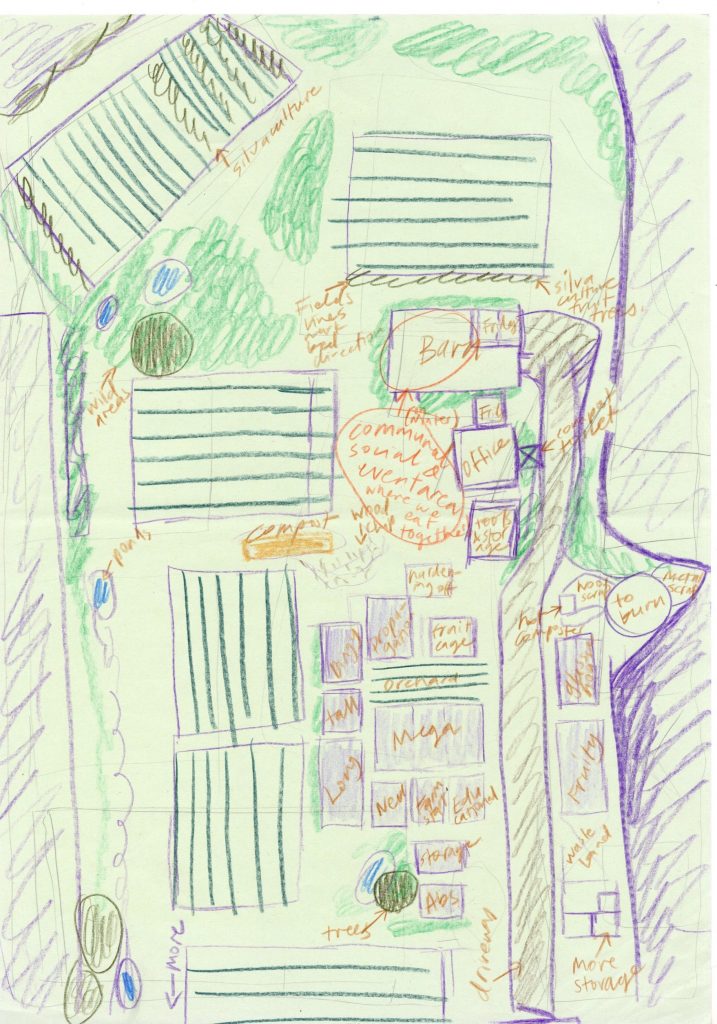
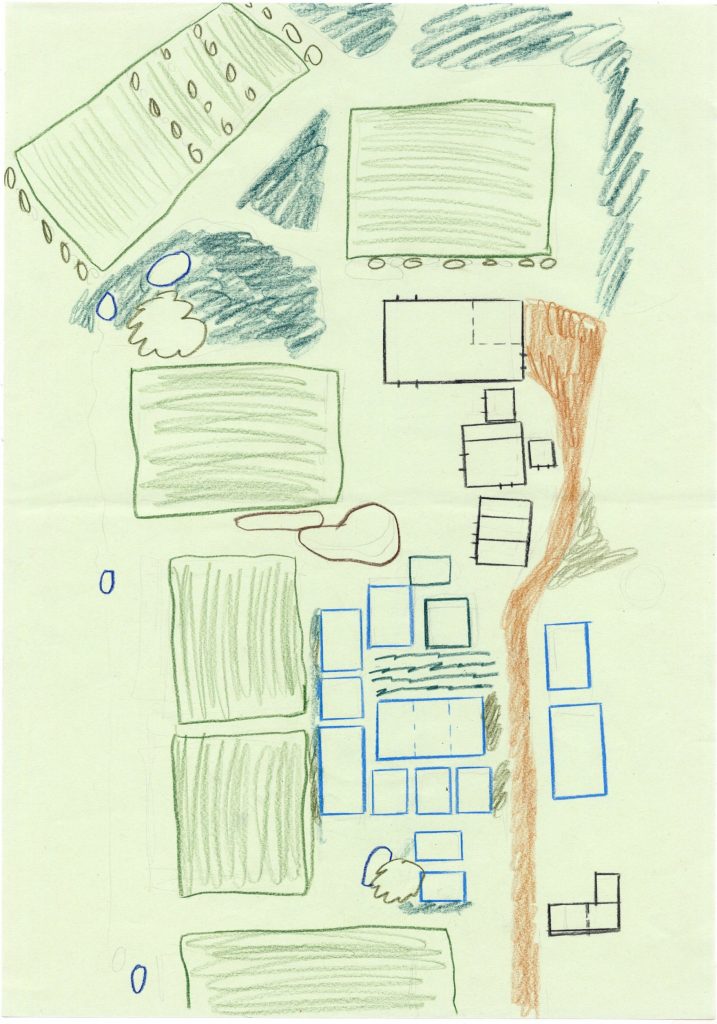
Once I managed to find an approximate scale that fit the whole site on an A3 I stated to think about what other audiences might benefit from a more specific map.

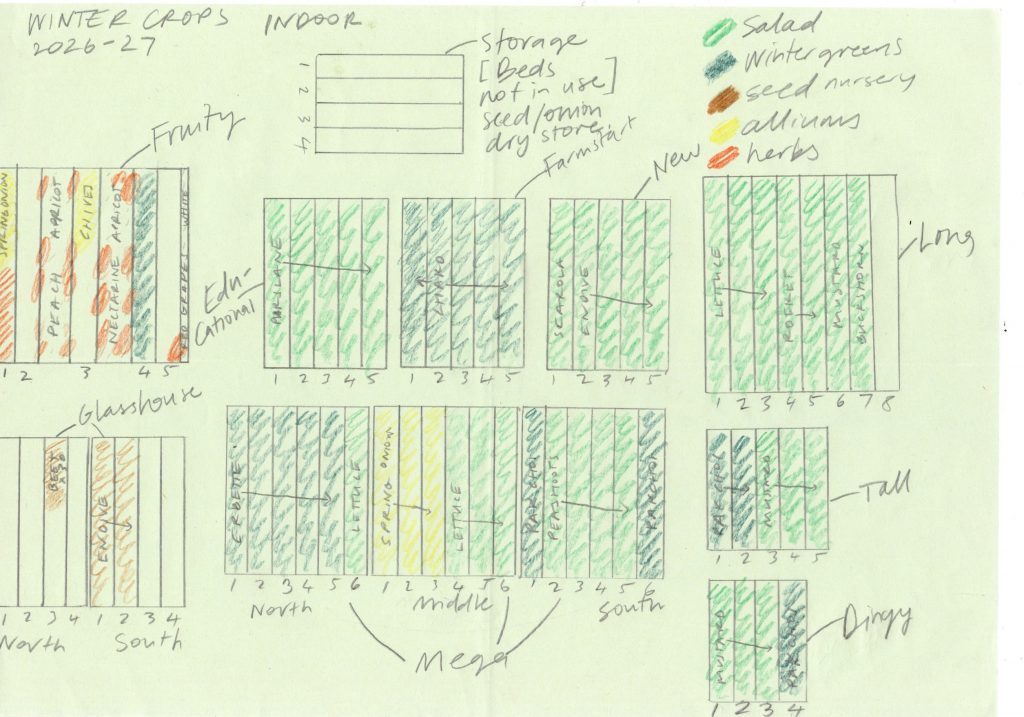
I began to draw a map of the indoor growing spaces that might aid volunteers in crop production and then a more informative though more abstract map of the autumn/winter crop plan to aid the growers.
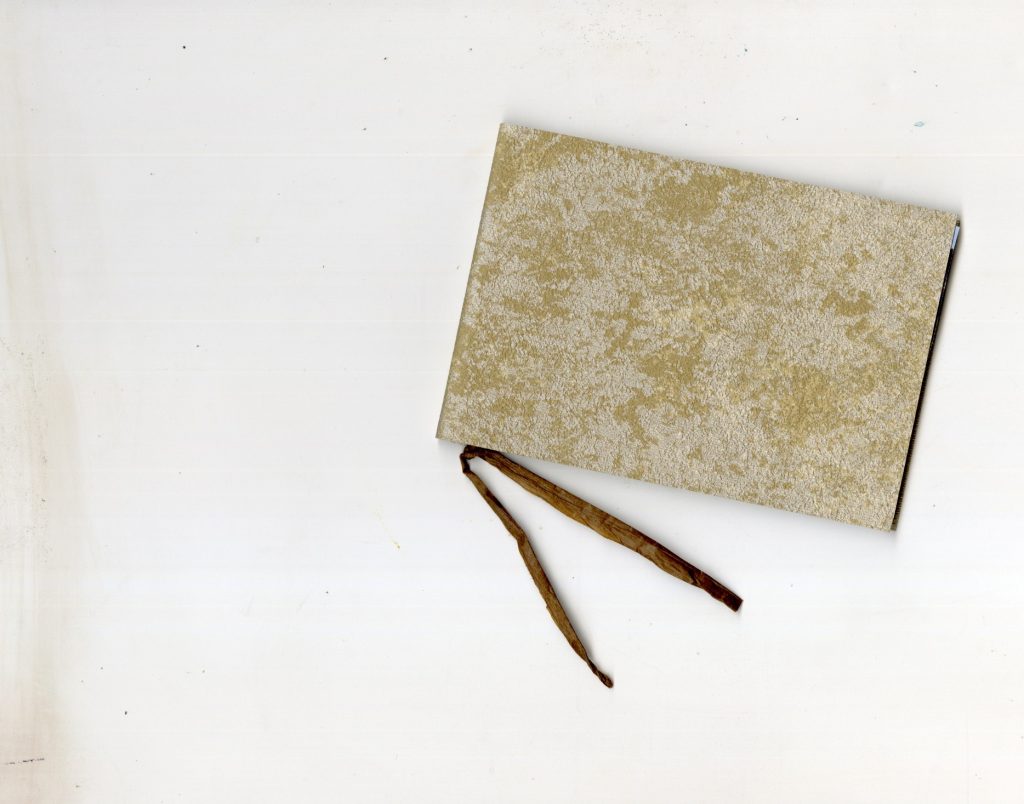
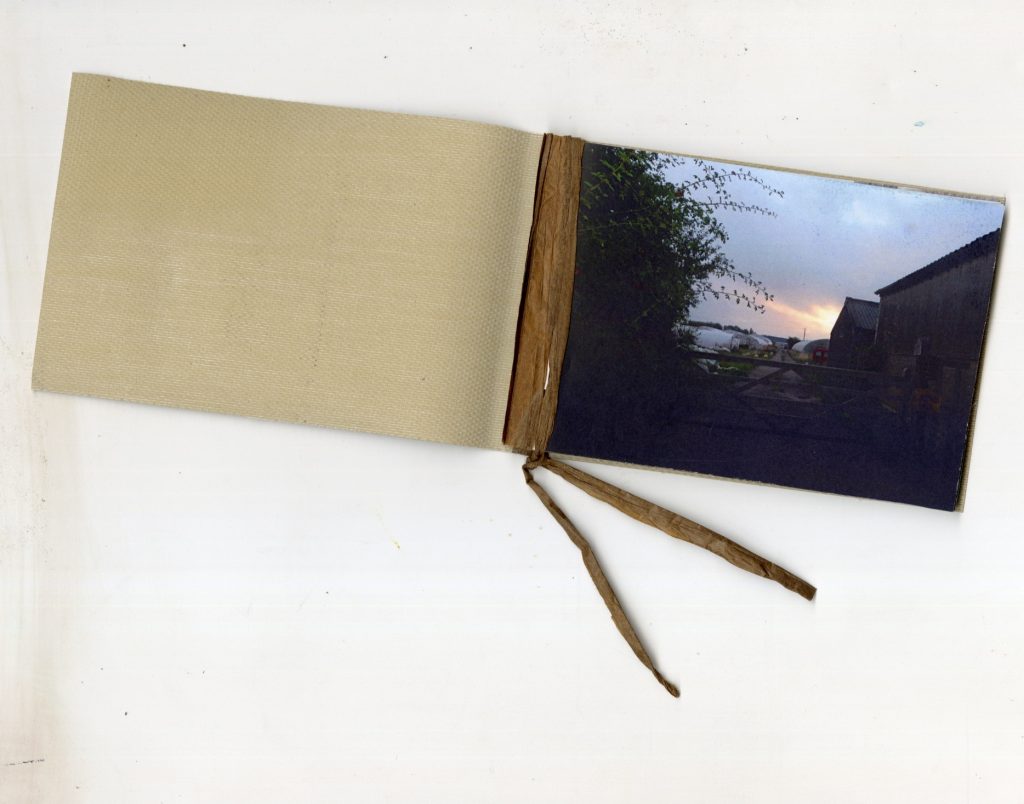
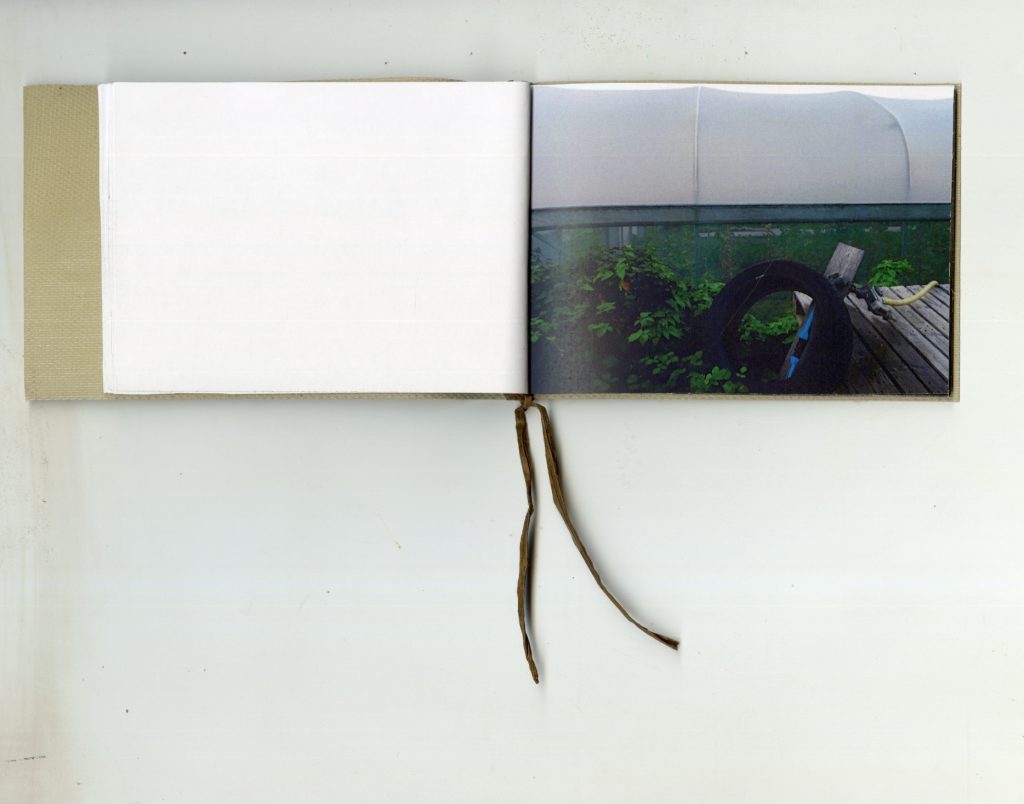
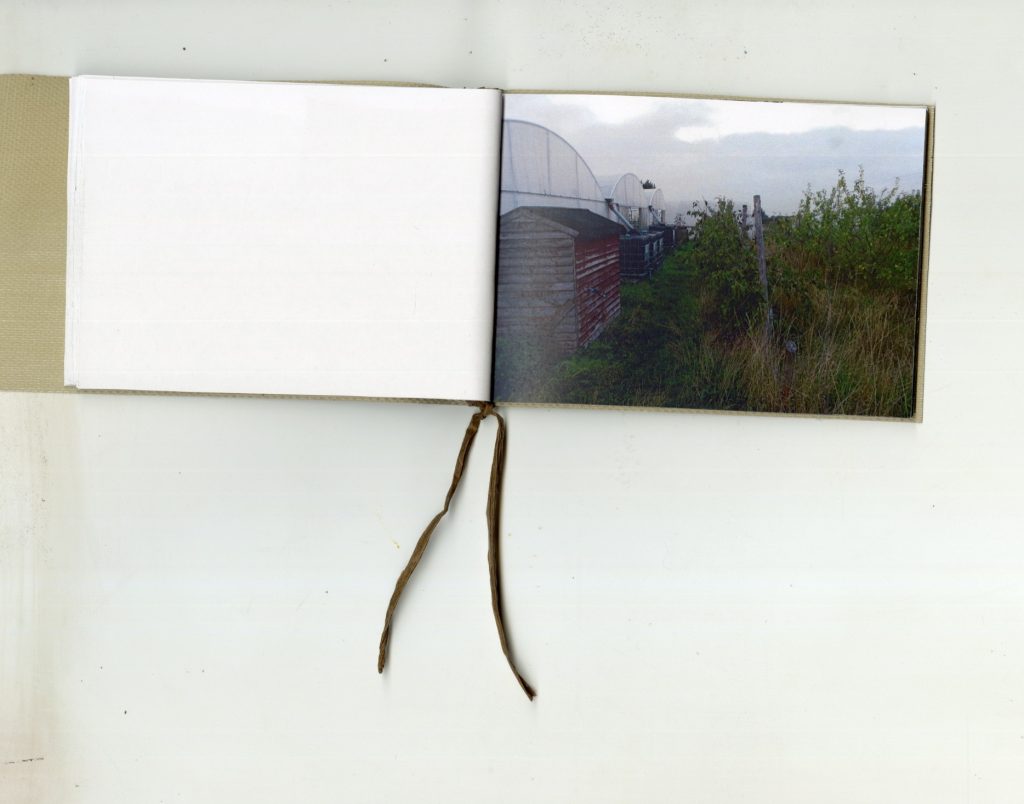
I also took several photos of the site, trying to gather enough visual material to adequately describe or give a sense of it to those in my tutorial group, who need to grasp the place somewhat without visiting. One morning when I arrived at work early I spent some time recording the sights I passed walking down the driveway. I then printed these out and made a small flip book, interested in how that might provide a sequenced view.
Exploring collage with farm specific materials
As collage featured so heavily as a method in my dialogues I decided to continue looking at it as a method for making images to describe the farm and my motivations for first visiting and remaining part of the farm community.
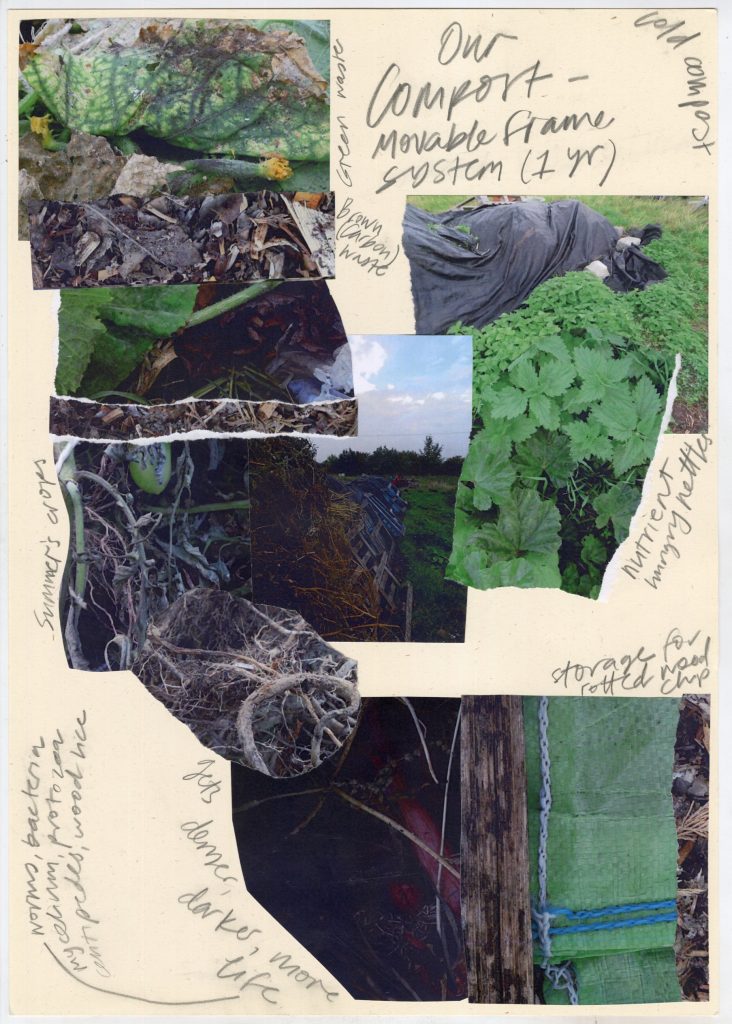
Below is a collage I made to show a simple and textural visualisation of the farm’s main composting process.
The level of description is mostly meaningful to those familiar with the site and the collage diagram does not cover the full process of compost, or even show the final compost. I’ve focused on the layering required of the inputs to the compost frame, which is important information for those working on site. Only gesturing to what will come from it, but also highlighting the nettle growing around the compost as a a fertility indicator. This is not a part of the compost making but a useful sign that things are going well!
I’ve found that collage more interesting to me within a participatory context and so I gave myself a collage task, based on a potential workshop prompt to test what effects different kinds of collage materials had on the process and final collages. The prompt was: What first brought you to the farm and what continues to bring you back? Below are two images made, one (L) from unrelated paper scraps and another (R) from photos of the farm I’d taken. Both are on A5 card and include handwritten elements, though I’d imagine supplying text would be a better way to incorporate text.
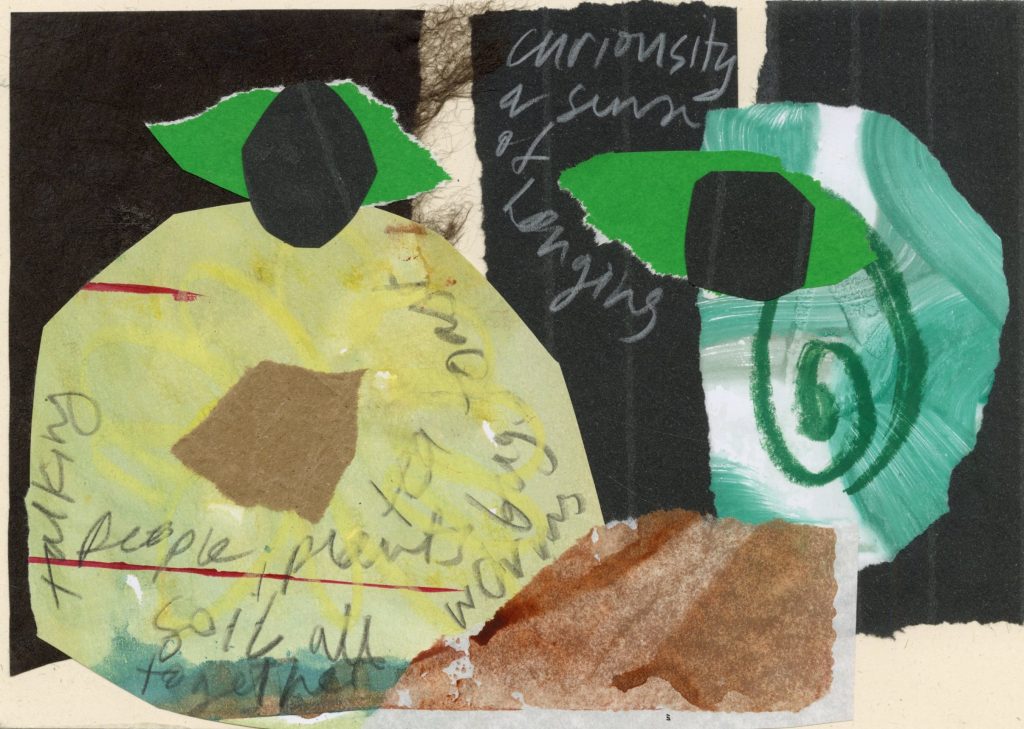
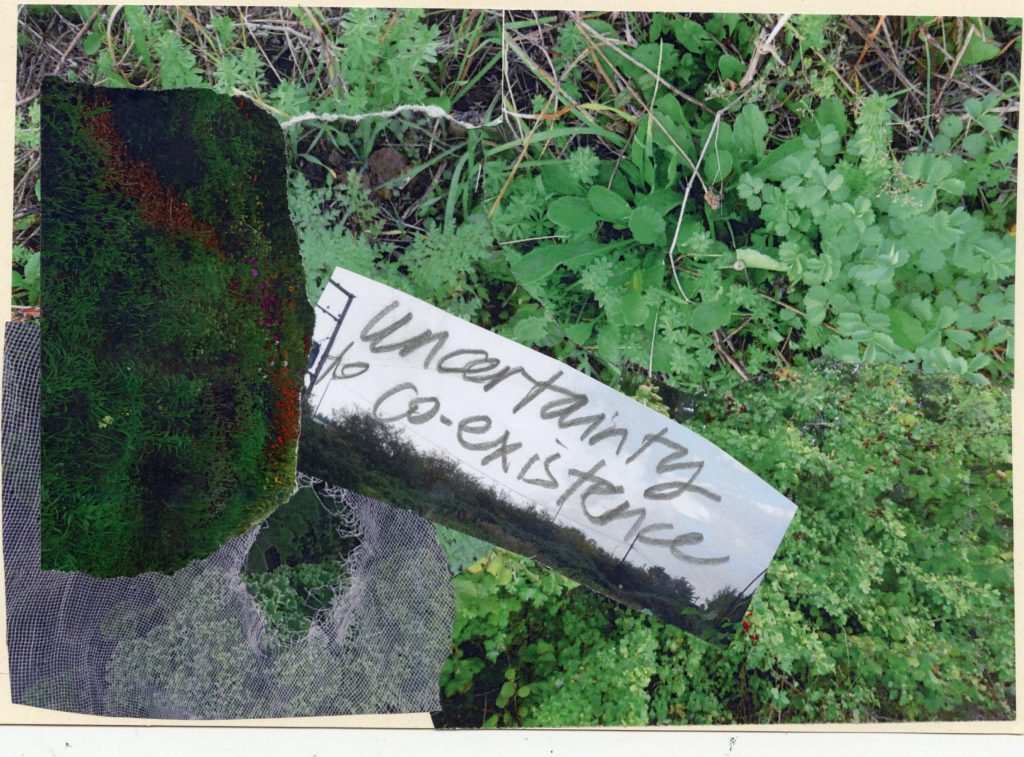
I feel inclined to leave collage behind now as I see its not necessarily a process that speaks to the kinds of attention I’ve been previously exploring. To me it seems more of a register of attention of associations and composition and as I am know thinking about research in the context of the farm community I think there is more to glean from continuing to experiment with processes or tools that are aimed at slowing down or shifting the act of looking.
Leave a Reply